
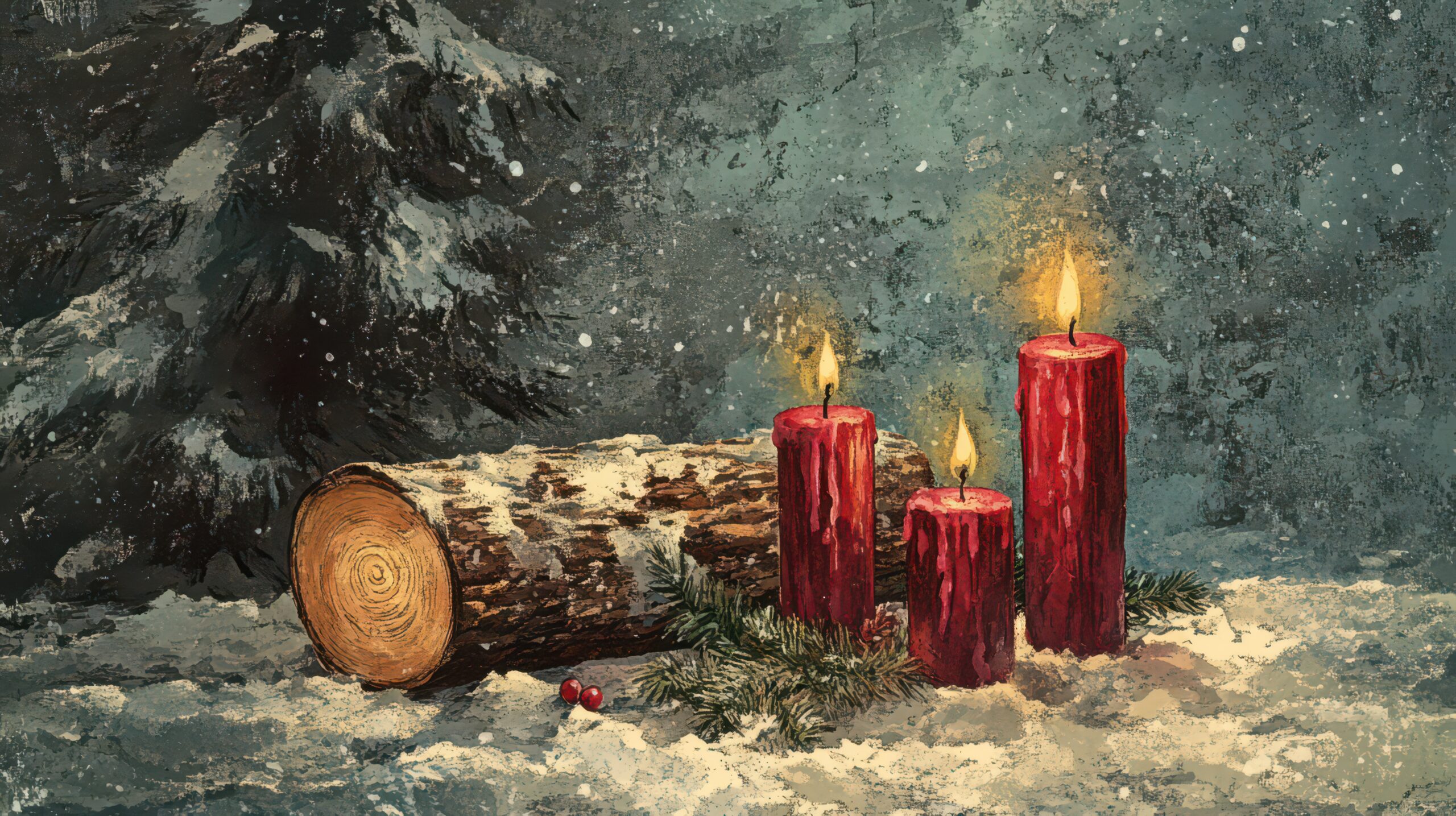
December is here and there are already festive decorations on street corners! Winter festivals have been a part of life for hundreds of years. One of the oldest winter festivals is that of Yule.
Yule is a pre-Christian festival that was historically observed by the Germanic peoples. It was usually celebrated around the winter solstice, which is around the 21st December in the northern hemisphere. Very little is known about the origins of the Yule festival, but historians now generally agree it began with the Norse festival of Jól (pronounced yule).
What was Jól
Yule, or Jól in Old Norse, was a multi-day midwinter festival celebrated by the Norse, Anglo-Saxons, and Germanic peoples. Though its exact length varied, it typically lasted 12 days, aligning closely with the later Christian “Twelve Days of Christmas.”
Central to Yule was the idea of rebirth the sun returning, nature beginning its slow reawakening, and communities reforming bonds that helped them through the darkest, coldest part of the year.

History
One of the earliest written references to Yule is made by the Venerable Bede, writing in the 8th Century. He mentions giuli – a two month period of the pagan calendar used by some Germanic peoples of the time to mark the lengthening days around the winter solstice.
By the 9th Century Christmas was becoming the predominant winter festival in northern Europe. As the Norse and Germanic people converted to Christianity, the festival of Yule was merged with or abandoned in favour of Christmas celebrations. In fact, in many northern European languages the word for Yule is the standard word for Christmas, and it is possible that some of our modern northern European Christmas traditions have roots in Yule practices.

Father Christmas
Many people have believed that other elements of Norse mythology are still part of our modern Christmas traditions. One particularly persistent belief is that Father Christmas is based on the Norse god Odin. Father Christmas, however, is a much more modern creation, believed to be inspired by the Greek bishop Nikolaos of Myra. The flying reindeer that pull Father Christmas’ sleigh through the sky appear to originate in early 19th-century literature. The initial mention of St Nicholas and his reindeer can be traced back to the 1821 poem “Old Santeclaus with Much Delight,” published anonymously. This poem, one of the earliest to reference Santa Clause, depicted a jolly figure traveling in a sleigh pulled by reindeer, though it did not provide specific names for the reindeer.
Modern Yule
In modern times, neo-Pagans celebrate the festival of Yule. In some cases these celebrations attempt to re-create the traditions believed to be ancient, while in others practices have been created and traditions adapted to suit individual or local beliefs or religious practices.
Teaching ideas
1. Bake a Yule Log
This is a great way to get kids involved – try this recipe at bbc food: https://www.bbc.co.uk/food/recipes/yule_log_15656

2. Look at modern traditions
What do you think might have originated with Yule

3. Compare Yule and Christmas Venn Diagram
Children can examine traditions, origins, and symbolism to see how winter celebrations evolved. And how they meet in the middle.
4. Make your own yule inspired Christmas card.
A classroom activity where the children can let loose their artistic minds.


5.Yule Folk Tale Storytelling
Have Children retell stories from Norse mythology linked to Yule, or create their own!
6. Create your own Yule tradition
Imagine you live in the dark for 3 months. What things would you do to celebrate the return of the sun?


7. Become modern day historians like Bede
Describe our current winter festivities for future generations!
Leave a Reply
You must be logged in to post a comment.